Most people think gum disease comes with obvious warning signs. Bleeding gums. Swelling. Pain. But the truth is, gum disease can progress quietly for months, sometimes years, before you notice anything serious. By the time discomfort sets in, the damage is often already deep.
If you live in Greenwood Village, CO, and have been brushing past minor mouth changes without a second thought, this article is for you. Knowing the early signals can be the difference between saving your teeth and losing them. Reaching out to a local periodontist could be the most important call you make this year.
Why Gum Disease Often Goes Undetected
Gum disease, or periodontal disease, does not always hurt. It is a bacterial infection that attacks the tissues and bone supporting your teeth. In its early stages, it is nearly painless. Many patients are shocked when they hear how far things have progressed.
The American Academy of Periodontology reports that nearly half of adults over 30 have some form of periodontal disease. That number climbs sharply after age 65. The scary part is most of them do not know it.
7 Silent Signs of Advanced Gum Disease
1. Gums That Pull Away from Your Teeth
If your teeth look longer than they used to, your gums may be receding. This is one of the most telling signs of advanced gum disease. Recession exposes the root of the tooth, which is softer and more vulnerable to decay. It also means the gum tissue is losing its grip, and the bone beneath may already be affected.
2. Persistent Bad Breath That Does Not Go Away
Everyone gets bad breath sometimes. But bad breath that lingers after brushing, flossing, and rinsing is a red flag. Bacteria trapped in deep gum pockets release sulfur compounds that cause a chronic odor. No amount of mouthwash will fix a bacterial infection below the gumline.
3. Teeth That Feel Loose or Have Shifted
Your teeth should feel firm. If one or more feel even slightly wobbly, or if you notice gaps forming between teeth that were not there before, the bone supporting those teeth may be breaking down. This is one of the more advanced signs and should not be ignored.
4. Sensitivity to Hot and Cold
Root exposure from receding gums leaves the inner layer of the tooth unprotected. This makes teeth react strongly to temperature changes. If a sip of cold water or a bite of warm food causes a sharp, brief pain, your gums may have already pulled back further than you realize.
5. Swollen or Discolored Gum Tissue
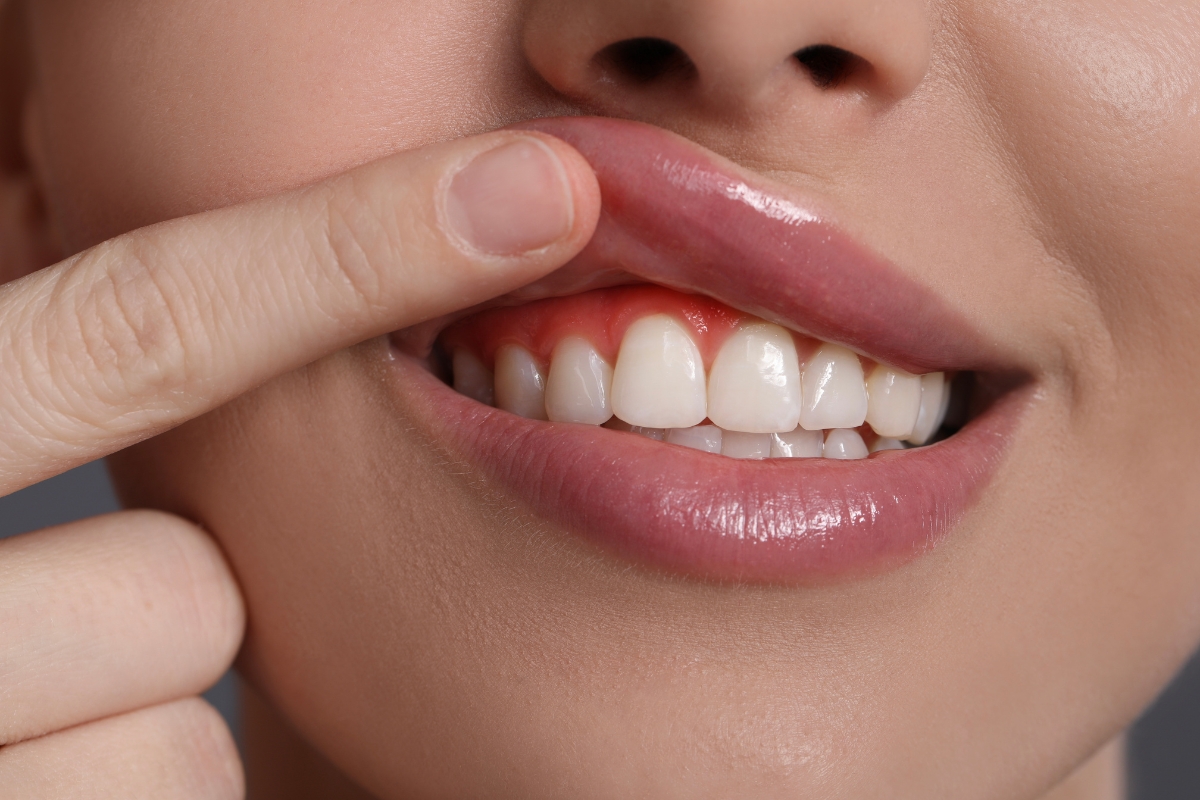
Healthy gums are pink and firm. Gums that appear red, purple, or look puffy even without pain are showing signs of ongoing infection. Many patients dismiss this as normal because it does not hurt. It is not normal, and it will not resolve on its own.
6. Gum Bleeding That Seems Random
Occasional bleeding during aggressive brushing is one thing. But gums that bleed when you eat, bleed without any provocation, or bleed multiple days in a row are signaling a deeper problem. This is your body reacting to an active infection below the surface.
7. Changes in How Your Bite Feels
If your teeth feel different when you bite down, or your upper and lower teeth no longer meet the way they used to, this could point to bone loss or shifting caused by periodontal disease. A change in your bite is something a qualified periodontist takes very seriously during evaluation.
You can learn more about how gum disease affects overall health through the Centers for Disease Control and Prevention’s oral health resources.
Why These Signs Are Easy to Miss
Here is the honest truth. Most of these signs develop so gradually that people adapt to them. The loose tooth gets accepted as “just how it is.” The bad breath gets blamed on coffee. The receding gums go unnoticed because no one stares at their gums every morning.
This slow progression is exactly what makes gum disease dangerous. By the time pain shows up, significant damage has already occurred. That is why regular periodontal screenings matter, even when nothing feels wrong.
The Oral Health Foundation has published clear, patient-friendly information on how to spot gum disease and what to do about it.
What Treatment Looks Like
Treatment depends on how far the disease has progressed. Early-stage cases are often managed with a deep cleaning process called scaling and root planing. This removes buildup below the gumline and smooths the root surface so bacteria cannot reattach easily.
More advanced cases may require surgical intervention, bone grafting, or tissue regeneration. A skilled periodontist will assess the full picture and recommend the most appropriate approach for your specific situation.
The goal is always to stop the infection, preserve the bone, and keep your natural teeth in place for as long as possible.
Frequently Asked Questions
1. Can gum disease go away on its own? No. Gum disease is a bacterial infection. It will not resolve without professional treatment. Improving your home care routine can slow it down, but it cannot reverse established damage.
2. How is advanced gum disease diagnosed? A periodontal exam involves measuring the depth of the pockets around each tooth. X-rays are used to evaluate bone levels. Together, these give a clear picture of how far the disease has progressed.
3. Is gum disease linked to other health conditions? Yes. Research has linked periodontal disease to heart disease, diabetes, stroke, and pregnancy complications. Treating gum disease can have benefits beyond just your mouth.
4. At what age does gum disease typically start? It can begin at any age, but it becomes more common in adults over 30. Risk increases with age, smoking, diabetes, and inconsistent oral hygiene.
5. How often should I see a periodontist if I have gum disease? Most patients with active periodontal disease are seen every 3 to 4 months for maintenance. Your provider will recommend a schedule based on your specific case.
6. Can gum disease cause tooth loss? Yes. Periodontal disease is the leading cause of tooth loss in adults. Bone loss from untreated infection eventually makes teeth unable to stay in place.
7. What is the difference between gingivitis and periodontitis? Gingivitis is the early, reversible form of gum disease that affects only the gum tissue. Periodontitis is more advanced and involves the bone and supporting structures around the teeth.
Conclusion: Do Not Wait Until It Hurts
Gum disease rarely announces itself loudly. It moves quietly, and most people only act when the damage is significant. If any of the seven signs above sound familiar, do not put it off.
The team at Mountain Top Periodontics & Implants in Greenwood Village, CO is experienced in diagnosing and treating all stages of periodontal disease. Schedule a consultation with a qualified specialist and get a clear picture of where your gum health stands today.
Your teeth do not have to be in pain for this to be urgent. Contact a local dental office that specializes in periodontal care and take the first step toward protecting your smile before the damage goes any further.