Getting a dental implant is one of the best decisions for your long-term oral health. But knowing what to expect after the procedure can make the whole process less stressful. Whether you’ve already had your implant placed or are still planning, this week-by-week guide will walk you through the healing journey clearly and honestly.
Why the Healing Timeline Matters
Every patient heals at a different pace, but the general stages of implant healing follow a reliable pattern. A qualified periodontist (a dental specialist who focuses on the gum tissue and bone that support your teeth) will closely monitor your healing progress at each stage. Understanding what’s normal, and what’s not, helps you feel confident and stay on track.
Week 1: The First Days After Surgery
This is the most sensitive phase. Swelling, mild bleeding, and soreness are all expected in the first 24 to 72 hours. Your body is working hard to start the healing process.
What to expect:
- Swelling around the jaw and cheek area
- Some bruising or minor bleeding
- Tenderness at the implant site
- Fatigue as your body heals
What to do:
- Stick to soft foods like yogurt, mashed potatoes, and soup
- Avoid hot drinks and smoking
- Take prescribed medications as directed
- Rest and avoid strenuous activity
The American Academy of Periodontology offers excellent resources on what post-surgical care looks like and why it’s so important for long-term success.
Week 2: Swelling Goes Down
By the second week, most of the visible swelling and discomfort should start to ease. You may still feel some tenderness when you chew or speak, but it’s manageable.
Your gum tissue begins to close around the implant site during this phase. This is a critical period for cleanliness. Gentle rinsing with salt water or a prescribed mouthwash helps keep bacteria away from the healing site.
Signs your recovery is going well:
- Swelling is noticeably reduced
- You can eat soft foods with less discomfort
- No sign of fever or increased pain
If anything feels off, reach out to your dental provider right away. Catching problems early keeps recovery on schedule.
Weeks 3 to 4: Tissue Healing Progresses
At this point, the gum tissue is healing well. You might feel almost back to normal in terms of daily comfort. However, the implant is still going through a deeper biological process called osseointegration, where the implant post fuses with your jawbone.
This phase is invisible to the eye but incredibly important. Skipping follow-up appointments or returning to hard foods too soon can interfere with this process.
According to the Journal of Dental Research, osseointegration can take anywhere from 3 to 6 months depending on individual bone density, overall health, and other factors.
Months 2 to 3: The Osseointegration Phase
This is where patience pays off. The titanium post is fusing with your jawbone. You won’t feel much during this stage, which is actually a good sign. Most patients resume their normal diet and activities, with the exception of extremely hard or crunchy foods.
Your periodontist will schedule check-ups during this period to take X-rays and confirm that the implant is integrating properly with the bone. These visits are not optional. They give your care team the data they need to move forward safely.
Month 4 to 6: Crown Placement Prep
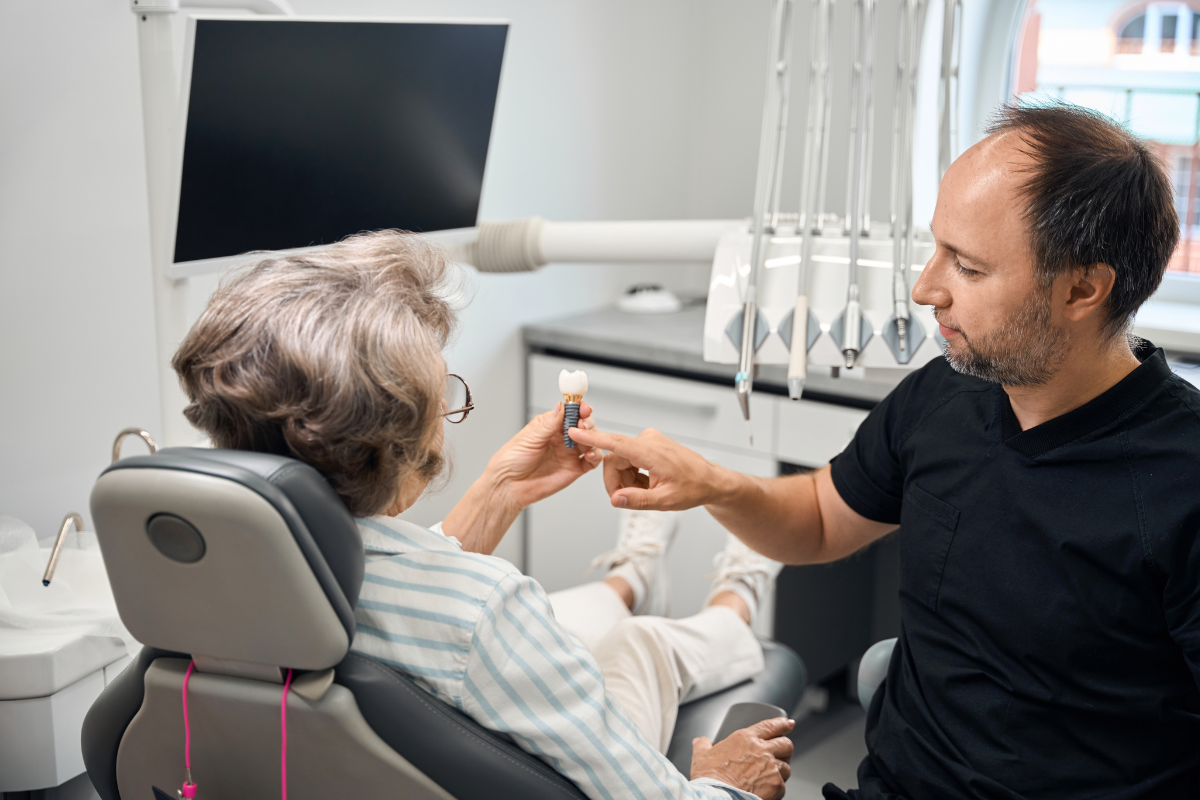
Once osseointegration is confirmed, the next step is placing the abutment (the connector piece) and then the final crown. This stage may involve minor gum tissue adjustment to get the crown to sit naturally.
What to expect at this stage:
- A short in-office procedure to place the abutment
- Impressions taken for your custom crown
- Final crown fitted and adjusted for bite comfort
The Cleveland Clinic’s dental implant guide outlines this process in detail and explains how the final restoration brings the whole treatment together.
After Month 6: Full Function and Long-Term Care
By now, most patients have a fully functional implant. It looks, feels, and works like a natural tooth. The focus now shifts entirely to maintenance.
Long-term care tips:
- Brush twice daily and floss around the implant
- Use a water flosser if recommended by your provider
- Avoid chewing ice or very hard foods
- Schedule regular cleanings every 6 months
With proper care, dental implants can last 15 to 25 years, or even a lifetime.
Frequently Asked Questions (FAQs)
Q1. How long does dental implant healing take in total? Most implants complete full healing within 3 to 6 months. Complex cases or patients with bone grafts may take longer.
Q2. Is pain normal after a dental implant? Mild discomfort in the first 1 to 2 weeks is normal. Sharp or worsening pain after that should be reported to your provider.
Q3. Can I eat normally during healing? Soft foods are recommended for the first few weeks. You can gradually return to a regular diet as your provider clears you.
Q4. What is osseointegration and why does it matter? It’s the process where the implant post bonds with your jawbone. Without it, the implant won’t have a stable base to support the crown.
Q5. Will my implant look natural? Yes. The custom crown is color-matched to your natural teeth and shaped to blend in seamlessly with your smile.
Q6. What can slow down the healing process? Smoking, poor nutrition, uncontrolled diabetes, and skipping follow-up visits can all delay healing.
Q7. How do I know if something is wrong with my implant? Warning signs include persistent pain, swelling that gets worse over time, implant movement, or difficulty chewing. Always report these to your dental provider promptly.
Conclusion
The dental implant healing process takes time, but each phase brings you closer to a restored smile that can last a lifetime. Staying informed, following your care team’s advice, and keeping every follow-up appointment are the keys to a smooth recovery.
At Mountain Top Periodontics & Implants in Greenwood Village, our team is here to guide you through every step of this journey with care and precision. If you’re considering dental implants or want to learn more about what the process looks like for you personally, schedule a consultation with our office today. You can also contact a local dental office near you to explore your options and find out if implants are the right fit for your smile.
Don’t wait to take the next step. Your future smile is worth it.