Gum disease does not develop overnight. It usually begins with inflammation of the gums and can progress into periodontitis, where the tissues and bone supporting the teeth become damaged. The earlier gum disease is identified, the more conservative treatment may be.
The earliest stage, gingivitis, is generally reversible with professional care and improved oral hygiene. Once periodontitis develops, the condition is considered irreversible because lost periodontal attachment and bone do not simply grow back. However, professional periodontal treatment can slow or control the disease and help protect the teeth and supporting structures.
For patients looking for gum disease treatment in Colorado Springs, understanding the stages can make it easier to recognize why treatment recommendations differ from one person to another.
What Are the Stages of Gum Disease?
Gum disease is commonly discussed as a progression from gingivitis to periodontitis. Under the current periodontal classification, periodontitis is further divided into four stages based on the severity and complexity of the disease:
- Gingivitis
- Stage I periodontitis
- Stage II periodontitis
- Stage III periodontitis
- Stage IV periodontitis
Periodontitis is also assigned a grade, which provides information about the disease’s rate of progression and relevant risk factors. Staging and grading are determined through a comprehensive periodontal evaluation rather than symptoms alone.
Stage 1: Gingivitis
Gingivitis is the earliest and most reversible form of gum disease.
It occurs when plaque accumulates around the gumline and causes inflammation. If plaque is not removed regularly, it can harden into tartar, which cannot be removed effectively with ordinary brushing and flossing.
Common signs include:
- Red or swollen gums
- Tender gums
- Bleeding during brushing or flossing
- Increased sensitivity around the gumline
- Occasional bad breath
At this point, the bone and supporting structures around the teeth have not been damaged by periodontitis.
The Centers for Disease Control and Prevention describes gingivitis as a reversible condition that can often be treated with good oral hygiene and professional dental care.
How Is Gingivitis Treated?
Treatment typically focuses on removing plaque and tartar and improving daily plaque control. Depending on your needs, treatment may include:
- Professional dental cleaning
- Improved brushing technique
- Daily flossing or another interdental cleaning method
- Oral hygiene instructions
- Follow-up examinations
The goal is to control the inflammation before it progresses into periodontitis.
At this stage, treatment is generally focused on controlling inflammation rather than repairing damage.
Stage 2: Stage I Periodontitis
Stage I periodontitis represents early periodontitis, meaning the disease has moved beyond gingival inflammation and there is measurable loss of the tissues supporting the teeth.
Unlike gingivitis, periodontitis involves destruction of periodontal support. Clinical attachment loss and early bone loss may be present, even when symptoms are limited.
This is one reason gum disease can be difficult to recognize on your own. The American Academy of Periodontology notes that periodontal disease can remain relatively quiet until more advanced stages.
What Happens During Stage I?
Bacteria and inflammation can extend below the gumline.
The gums may begin forming periodontal pockets, which create spaces where plaque and bacteria can accumulate.
A periodontal evaluation may include:
- Periodontal probing
- Measurement of pocket depths
- Assessment of gum recession
- Evaluation of clinical attachment loss
- Dental X-rays to evaluate bone levels
- Review of medical and dental history
The exact findings determine how the disease is classified and how treatment should be planned.
How Is Stage I Periodontitis Treated?
Treatment may involve professional removal of plaque and calculus above and below the gumline, improved home care, and close monitoring.
Depending on pocket depth and other clinical findings, nonsurgical periodontal therapy may be recommended.
The American Dental Association describes nonsurgical periodontal treatment as including professional removal of plaque, biofilm, and calculus along with a consistent daily plaque-control routine.
The objective is to control the infection and prevent additional periodontal destruction.
Stage 3: Stage II Periodontitis
Stage II periodontitis represents established periodontitis with greater supporting-tissue destruction than Stage I.
At this point, the disease has caused more measurable damage to the structures that hold the teeth in place.
You may still have few obvious symptoms, but a periodontal examination can reveal deeper periodontal pockets, attachment loss, and radiographic bone loss.
The American Academy of Periodontology describes Stage II as established periodontitis in which standard periodontal treatment principles can often be used to control disease progression, while ongoing monitoring remains important.
How Is Stage II Periodontitis Treated?
Treatment may include:
- Scaling and root planing
- Removal of subgingival calculus
- Improved home plaque control
- Management of plaque-retentive factors
- Periodontal maintenance
- Reassessment after initial treatment
Scaling and root planing is designed to remove plaque, calculus, and bacterial deposits from affected tooth surfaces below the gumline. The AAP explains that this nonsurgical treatment can help create a root surface that is more compatible with periodontal health.
Mountain Top Periodontics & Implants already has dedicated content explaining the scaling and root planing procedure, so this article should link to that resource rather than repeating its detailed procedural explanation.
Stage 4: Stage III Periodontitis
Stage III periodontitis is severe periodontal disease with significant damage to the tissues supporting the teeth and an increased risk of tooth loss.
At this stage, periodontal pockets can become deeper, bone loss can be more extensive, and complex areas of disease may develop.
The American Academy of Periodontology’s classification considers factors such as attachment loss, radiographic bone loss, tooth loss caused by periodontitis, deep periodontal defects, furcation involvement, and other complexity factors when determining the stage.
What Can Happen During Stage III?
Depending on the individual case, patients may experience:
- Deeper periodontal pockets
- Significant gum recession
- Bone loss
- Tooth mobility
- Furcation involvement around multirooted teeth
- Changes in the position of teeth
- Difficulty maintaining certain areas with normal brushing and flossing
- Increased risk of losing affected teeth
Not every person with Stage III periodontitis will experience all of these problems.
How Is Stage III Periodontitis Treated?
Treatment depends heavily on the location and complexity of the disease.
Nonsurgical periodontal treatment may be the first step in appropriate cases. If disease remains in areas that cannot be adequately controlled with nonsurgical therapy, additional periodontal procedures may be considered.
Depending on the clinical findings, treatment can include:
- Scaling and root planing
- Periodontal maintenance
- Localized periodontal procedures
- Osseous surgery
- Regenerative procedures in appropriate defects
- Laser-assisted periodontal treatment when indicated
- Extraction of teeth that cannot be predictably maintained
The goal is not simply to make the gums look healthier. Treatment is intended to control the periodontal infection, reduce active inflammation, preserve teeth when possible, and establish conditions that can be maintained over time.
Stage 5: Stage IV Periodontitis
Stage IV is the most advanced category of periodontitis and involves significant periodontal destruction that can affect the function and stability of the dentition.
The distinction between Stage III and Stage IV is not based simply on the amount of bone loss. Complexity factors such as significant tooth loss, impaired chewing function, severe tooth mobility, and changes to the bite can influence the stage.
At this stage, treatment may require a more comprehensive approach.
What Are the Goals of Stage IV Treatment?
Treatment planning may focus on:
- Controlling active periodontal disease
- Preserving teeth that can be maintained
- Managing severe periodontal defects
- Stabilizing mobile teeth when appropriate
- Addressing changes in bite or function
- Replacing teeth when necessary
- Establishing long-term periodontal maintenance
In some cases, periodontal treatment may need to be coordinated with restorative or implant treatment.
The first priority is controlling active periodontal disease before moving forward with complex tooth replacement or rehabilitation.
How Do Periodontists Determine Your Gum Disease Stage?
You cannot reliably determine your periodontal stage simply by looking at your gums.
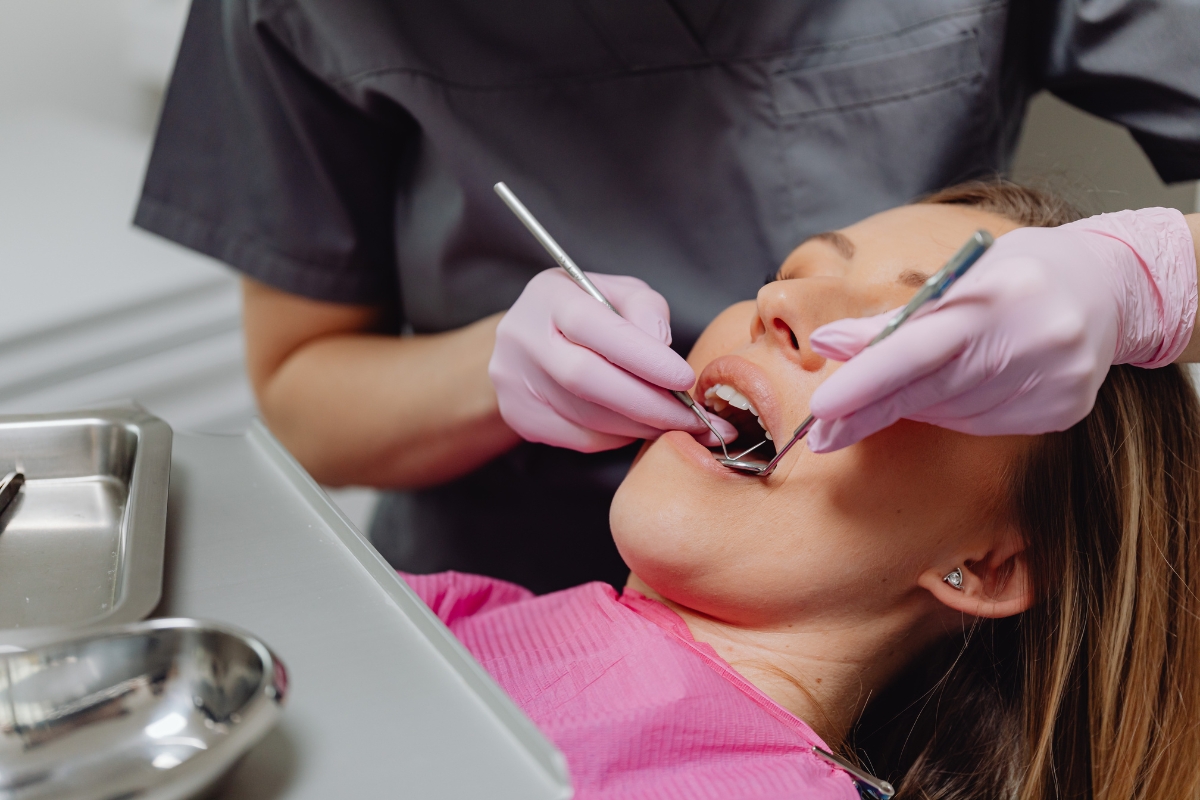
A comprehensive periodontal evaluation may involve several measurements and diagnostic tools.
Periodontal Probing
A periodontal probe is used to measure the depth of the spaces between the gums and teeth.
These measurements help identify periodontal pockets and areas requiring closer attention.
Clinical Attachment Loss
Clinical attachment loss measures the amount of periodontal support that has been lost around a tooth.
It is one of the important factors used when determining periodontitis stage.
Dental X-Rays
Radiographic imaging helps evaluate the amount and pattern of bone loss around the teeth.
Tooth Mobility
Loose or shifting teeth can provide information about the stability of the periodontal supporting structures.
Medical and Risk-Factor Review
Your periodontal evaluation may also consider factors that influence disease progression, including smoking, diabetes and glycemic control, previous disease progression, and other relevant health information.
This is where grading becomes important.
What Is the Difference Between Gum Disease Stage and Grade?
Stage and grade are not the same thing.
Stage describes the severity and complexity of the periodontal disease.
Grade provides information about how quickly the disease may be progressing and factors that can influence future risk and treatment response.
The current classification uses:
- Grade A: Slow rate of progression
- Grade B: Moderate rate of progression
- Grade C: Rapid rate of progression
The grade can incorporate evidence of previous progression and risk factors such as smoking and diabetes or glycemic control.
This means two patients can have a similar stage of periodontitis but receive different treatment and monitoring recommendations because their risk profiles are different.
Does Gum Disease Always Progress From One Stage to the Next?
No.
Gum disease progression is not necessarily a straight line in which every patient moves from gingivitis to Stage I, then Stage II, Stage III, and Stage IV.
Some people may have gingivitis that remains controlled for years. Others may develop periodontitis and experience different rates of progression.
Risk factors, oral hygiene, smoking, diabetes, genetics, previous periodontal history, and response to treatment can all influence disease management.
The current periodontal classification specifically separates stage, which describes disease severity and complexity, from grade, which provides information about progression risk.
That is why periodontal treatment should be based on an individual evaluation rather than a generic treatment schedule.
Can Gum Disease Be Treated Without Surgery?
Sometimes.
Early gum disease may respond to professional cleaning and improved home care.
For periodontitis, nonsurgical periodontal treatment such as scaling and root planing can be appropriate depending on the severity and location of the disease. The American Academy of Periodontology notes that many patients do not require additional treatment after scaling and root planing, although ongoing periodontal maintenance is often needed to maintain periodontal health.
However, nonsurgical treatment has limitations.
If periodontal pockets or defects remain after initial treatment, a periodontist may recommend additional procedures to address areas that cannot be adequately managed with nonsurgical therapy.
The treatment decision should be based on the response to initial therapy and the specific anatomy of the affected areas.
Why Periodontal Maintenance Matters After Treatment
Treating active gum disease is not necessarily the end of periodontal care.
Periodontitis is a chronic condition that can be managed but can become active again when the factors contributing to the disease are not controlled.
Mountain Top Periodontics & Implants already provides periodontal maintenance for patients who have completed periodontal treatment. Maintenance visits allow the periodontal team to monitor the gums and remove plaque and tartar from areas that are difficult to maintain at home.
Your maintenance schedule should be based on your periodontal history, risk factors, response to treatment, and ongoing clinical findings.
When Should You See a Periodontist?
Consider a periodontal evaluation if you notice:
- Gums that bleed regularly
- Persistent gum swelling or redness
- Gums pulling away from your teeth
- Persistent bad breath
- Pus around the gums
- Loose or shifting teeth
- Changes in your bite
- Increasing spaces between teeth
- A history of periodontal disease
The American Academy of Periodontology lists bleeding gums, recession, loose or separating teeth, persistent bad breath, pus, and bite changes among potential warning signs of periodontal disease.
You do not need to wait until your teeth become loose before seeking an evaluation.
Early diagnosis can help identify periodontal problems while treatment options are generally less complex.
Gum Disease Treatment in Colorado Springs
If you are looking for gum disease treatment in Colorado Springs, Mountain Top Periodontics & Implants provides periodontal care focused on diagnosing, treating, and managing conditions affecting the gums and supporting structures around the teeth.
Treatment options can range from nonsurgical periodontal therapy and maintenance to more advanced periodontal procedures when indicated.
Because periodontal disease can look different from one patient to another, the appropriate treatment should be based on a complete periodontal evaluation rather than symptoms alone.
Visit our dental practice in Colorado Springs if you are experiencing signs of gum disease or have been told that you may have periodontal problems. Our periodontal team can evaluate your gum health, determine the extent of disease, and explain your treatment options.
Frequently Asked Questions
What is the first stage of gum disease?
The first stage is gingivitis, which causes inflammation of the gums. It is generally reversible with appropriate professional care and good daily oral hygiene.
What are the four stages of periodontitis?
Periodontitis is classified as Stage I, Stage II, Stage III, or Stage IV. The stages describe the severity, extent, and complexity of periodontal destruction.
Is Stage 1 periodontitis reversible?
Periodontitis itself is not considered reversible because the attachment and bone that have been lost do not simply return to their original condition. However, early periodontitis can often be managed through professional periodontal treatment and ongoing plaque control.
Can Stage 2 gum disease be treated without surgery?
Many patients with established periodontitis can initially be treated with nonsurgical periodontal therapy, including professional removal of plaque and calculus and scaling and root planing when indicated. The need for additional treatment depends on the individual response and remaining periodontal defects.
What happens if Stage 3 periodontitis is not treated?
Untreated advanced periodontitis can continue to damage the tissues and bone supporting the teeth and may increase the risk of tooth mobility and tooth loss.
Can advanced gum disease be treated?
Yes. Advanced periodontal disease can often be managed with appropriate professional treatment. Depending on the severity and complexity, treatment may include nonsurgical therapy, periodontal surgery, regenerative procedures, tooth stabilization, extraction of teeth that cannot be maintained, and long-term maintenance.
How do I know what stage of gum disease I have?
A periodontist determines the stage through a comprehensive evaluation that can include periodontal probing, clinical attachment measurements, dental X-rays, assessment of tooth loss and mobility, and evaluation of disease complexity and risk factors.
The Bottom Line
Gum disease ranges from reversible gingivitis to advanced periodontitis that can threaten the stability of the teeth. The appropriate treatment depends on how much periodontal damage has occurred, how complex the condition is, and the patient’s individual risk of progression.
Gingivitis may be managed with professional cleaning and improved home care. Early periodontitis may require nonsurgical periodontal therapy, while more advanced stages can require additional periodontal procedures and comprehensive long-term management.
The most important step is determining the condition of your gums before significant damage occurs.
If you are experiencing bleeding, swollen gums, recession, persistent bad breath, loose teeth, or other signs of periodontal disease, schedule a periodontal evaluation. Early assessment can help identify the stage of gum disease and determine the appropriate treatment approach for protecting your natural teeth.